
The IT nerd as a mindset
Why scepticism, persistence, curiosity, and technical integrity matter in complex IT projects.
The name IT-NERDS expresses our commitment to approach IT independently, honestly, and with technical rigour. It means curiosity and technical depth, independent judgement, and taking responsibility for explaining decisions clearly and documenting them so they can be reviewed. This helps organisations not merely use their infrastructure but understand and control it, and keep it manageable in an emergency. Whether we live up to that commitment is demonstrated by our work, not by the name itself.
The following classification is deliberately humorous and makes no scientific claim. People are, of course, more than labels or circles in a diagram.
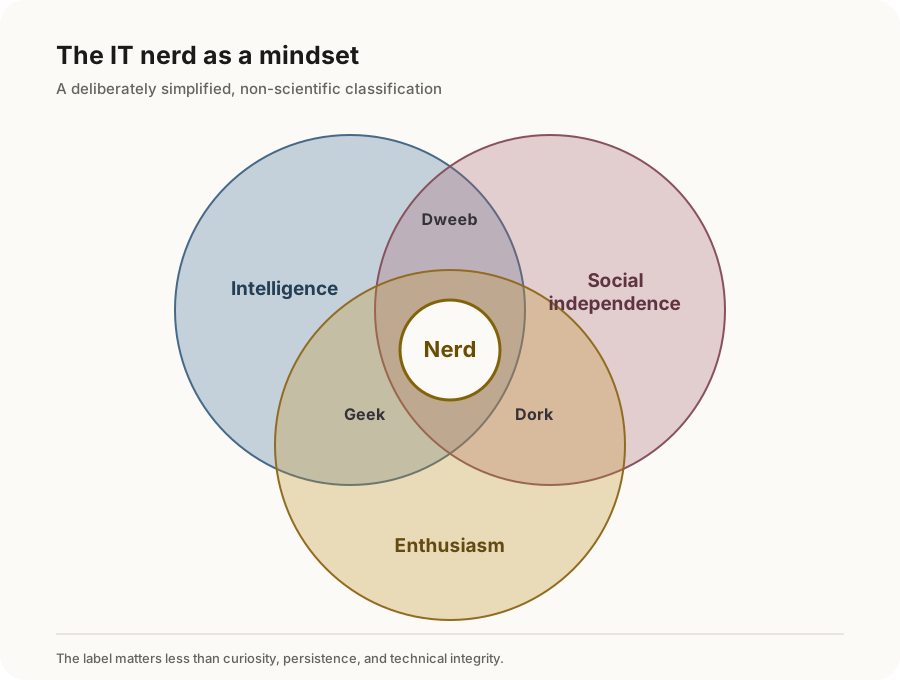
From label to mindset
When intelligence and enthusiasm meet, the diagram calls the result a geek: someone who voluntarily explores a subject more deeply than may seem strictly necessary.
When enthusiasm and social independence meet, the tongue-in-cheek label is dork: deeply absorbed in a subject while occasionally treating convention as optional guidance.
The combination of intelligence and social independence becomes the dweeb: clever, analytical, and perhaps more persuasive when talking to a server than while making small talk.
At the intersection is the nerd: intelligent enough to understand a complex problem, persistent enough not to abandon it too early, and independent enough not to be overly impressed by fashions or group dynamics.
These English labels are imprecise and do not translate neatly. The label matters less than the mindset behind it.
What distinguishes an IT nerd?
An IT nerd combines expertise, scepticism, persistence, and a necessary sense of humour. Instead of following every trend, the focus remains on solutions that are robust, understandable, and controllable.
For us, digital independence therefore means more than cloud, compliance, or large claims about resilience and sovereignty. It begins with a simpler question:
Does an organisation still understand and control its own infrastructure?
If the answer is unclear, the problem is often not purely technical. Difficulties commonly arise around organisation, responsibilities, communication, fear of mistakes, entrenched habits, budget logic, or an inability to make decisions.
IT people sometimes jokingly call the human being at the keyboard Layer 8. No such layer exists in the official network models. In practice, however, human and organisational factors often determine whether technology supports work or merely creates more complexity. This is not about blame; it is a reminder to consider systems together with their users and owners.
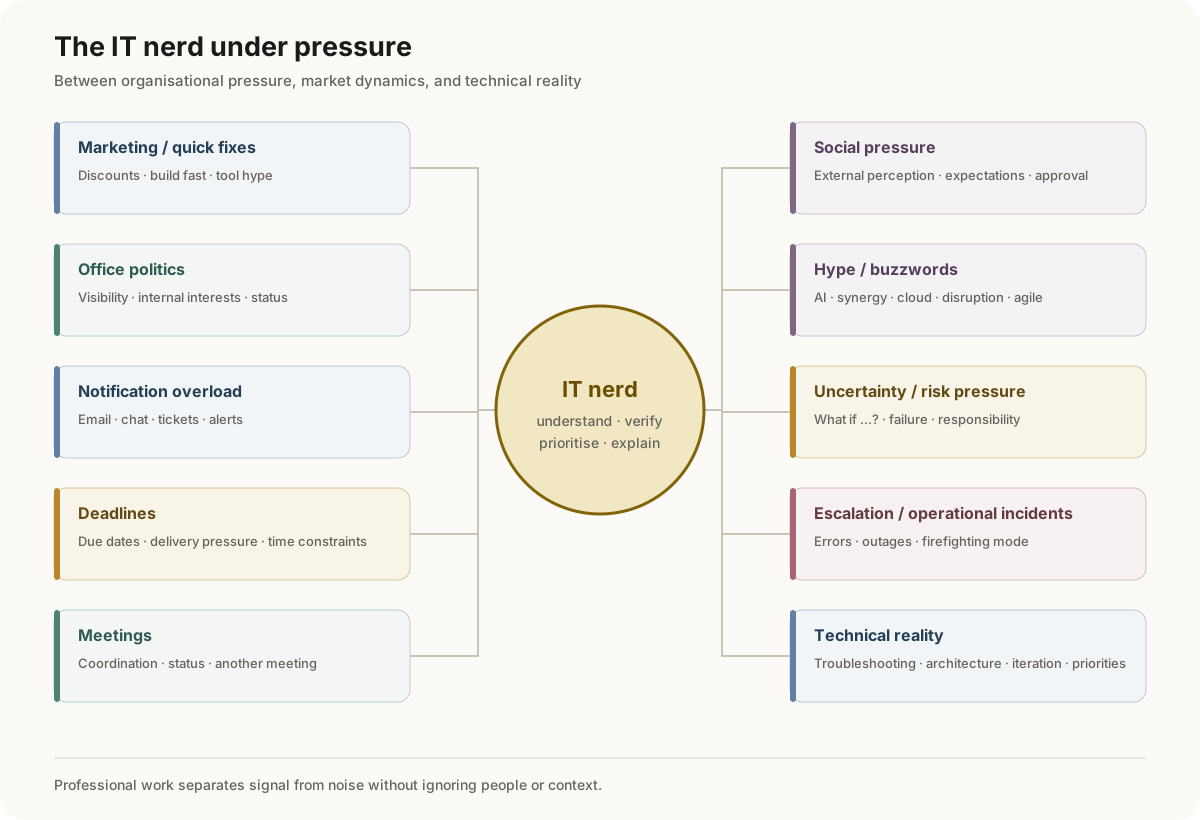
Why is this mindset a good partner?
The IT nerd is not an isolated eccentric who communicates only with blinking machines in a dark basement. In complex situations, one ability is particularly valuable:
They tolerate not knowing for a little longer.
They do not immediately lose patience when something fails. They do not replace a product merely because a process has stalled. And they do not confuse a new interface with a solved root cause.
Instead, they ask:
- What is actually happening?
- Which dependencies exist?
- Which assumptions have not yet been tested?
- Is the system understood in its constituent parts?
- Are we solving the problem, or only its visible symptom?
They aim not to become emotionally attached to a vendor, product, or their own initial opinion. A preferred solution may be discarded when evidence contradicts it. A cherished concept may fail. Even one’s own mistake is acceptable, provided one is willing to find and correct it.
That is not stubbornness. It is technical integrity.
Perhaps every organisation needs an IT nerd
Someone who wants to understand relationships, systems, and processes. Someone who does not stop at the first plausible result, but follows a cause carefully. Someone who does not reinterpret technical facts for convenience, hierarchy, or political expediency.
Budgets, priorities, and strategies can be negotiated. Physics is less accommodating.
For a consultancy, this mindset is credible only when paired with communication, documentation, and respect. That is why it belongs in this knowledge section: not as self-congratulation, but as a standard against which our work can be judged.